
Escher's lobsters - 12K HyperPixel digital print artwork download - PNG format
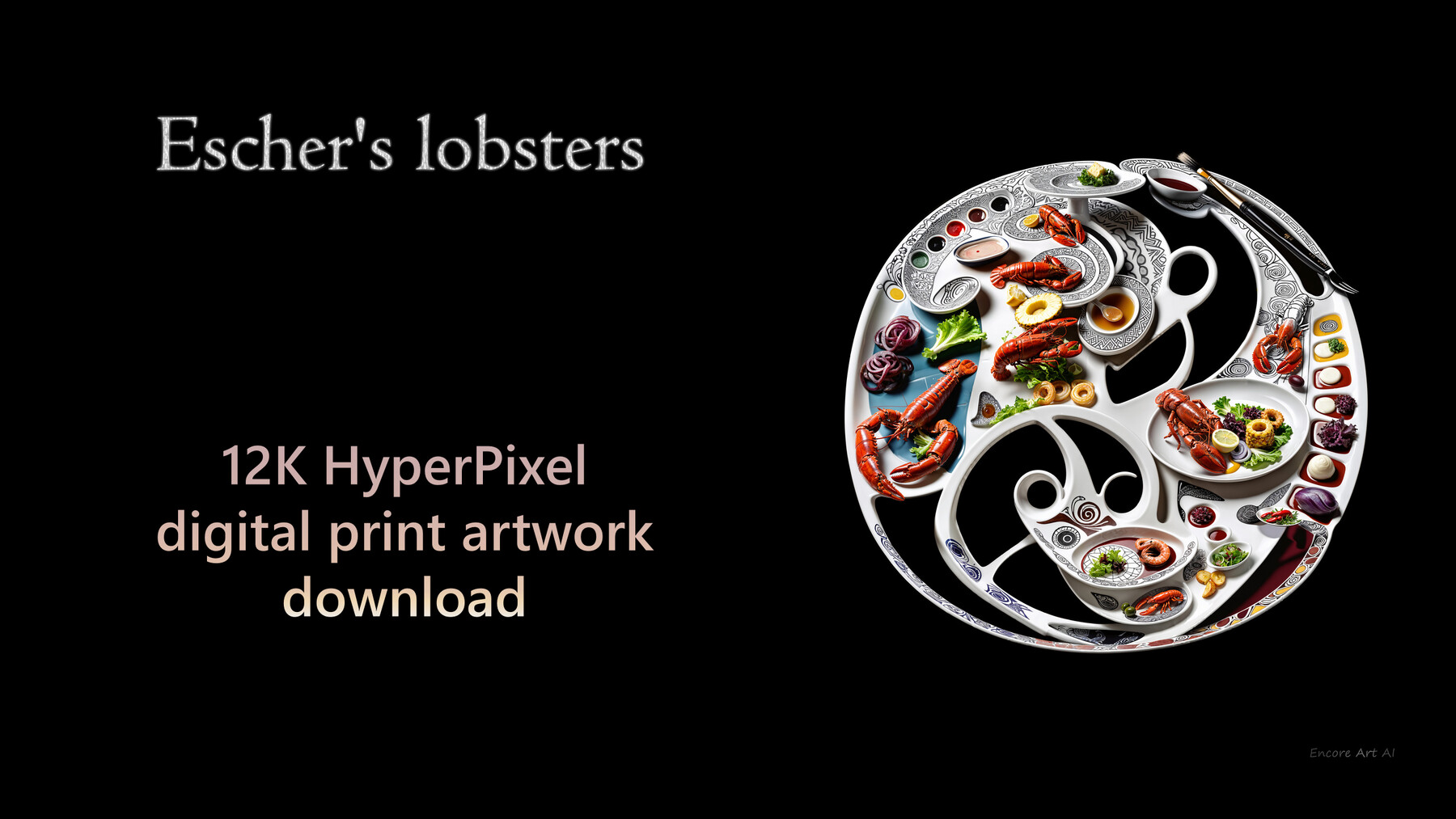
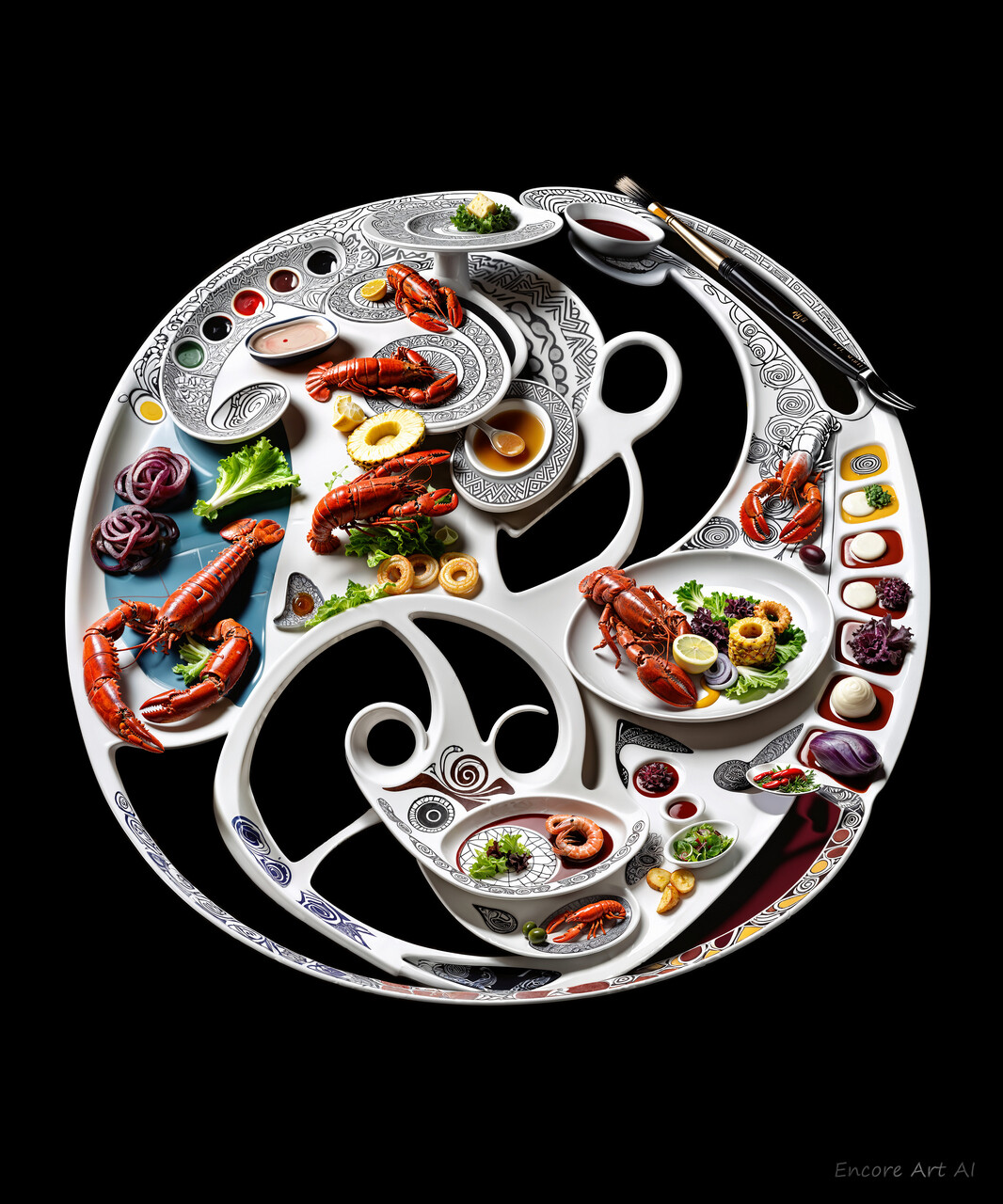
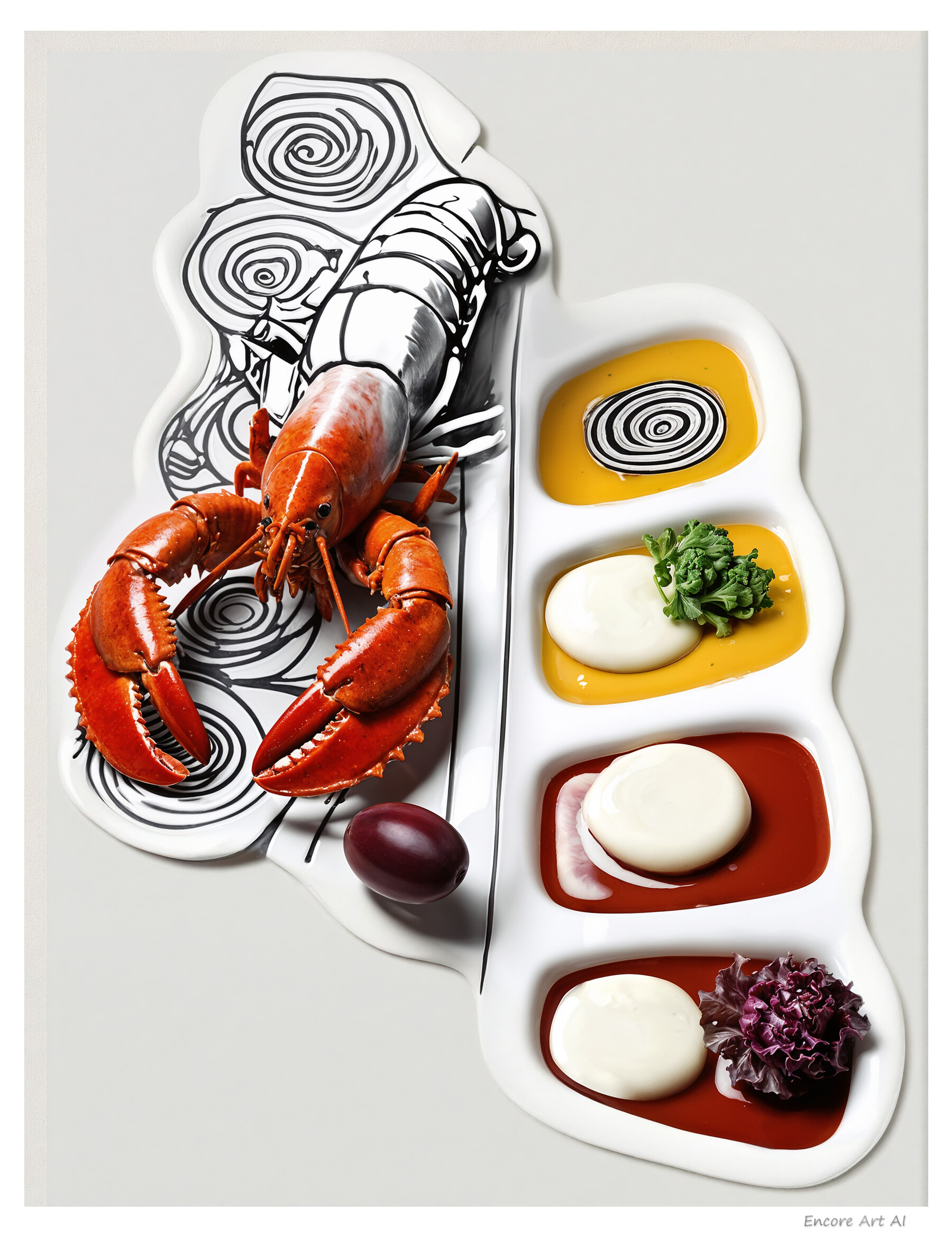
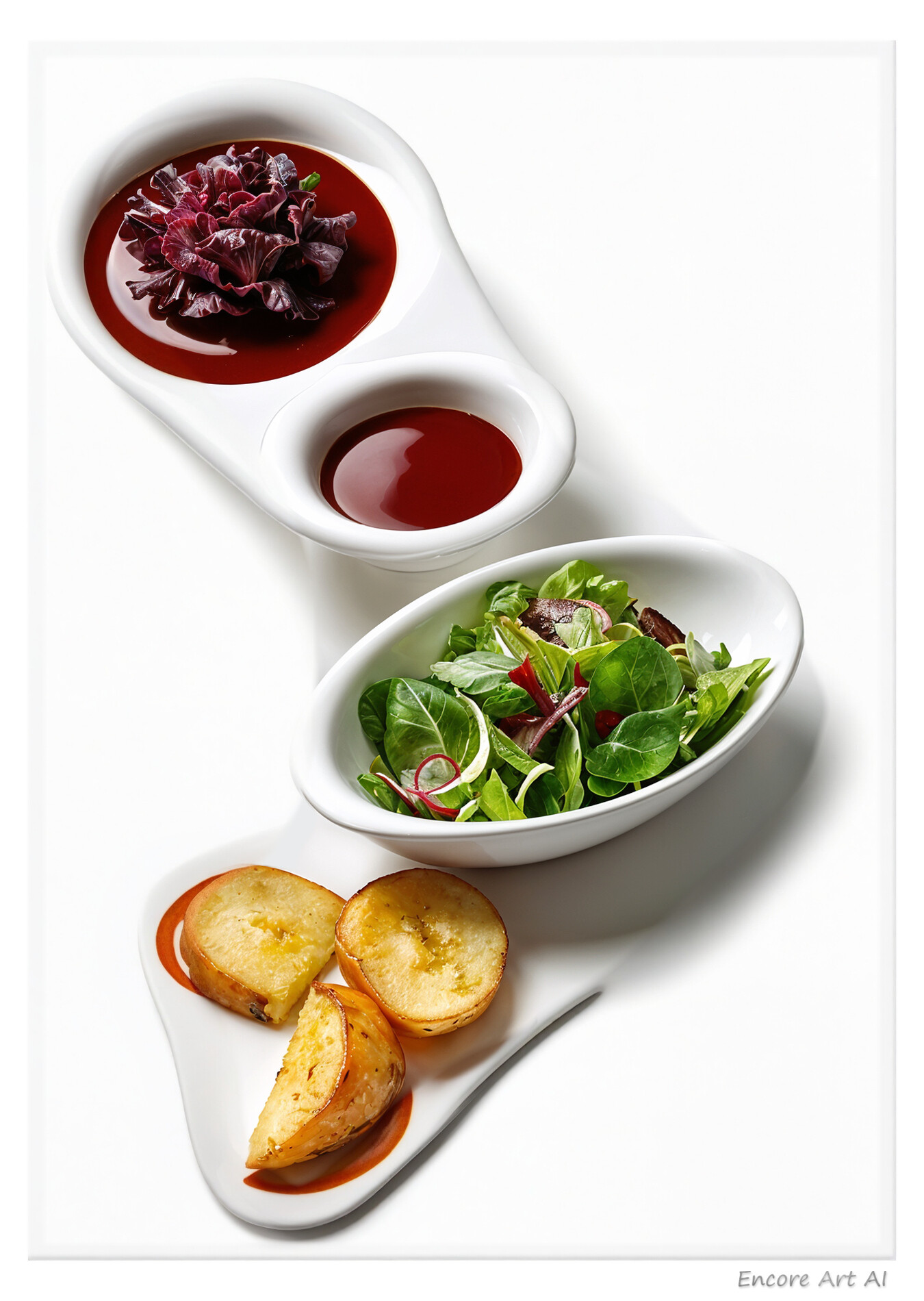
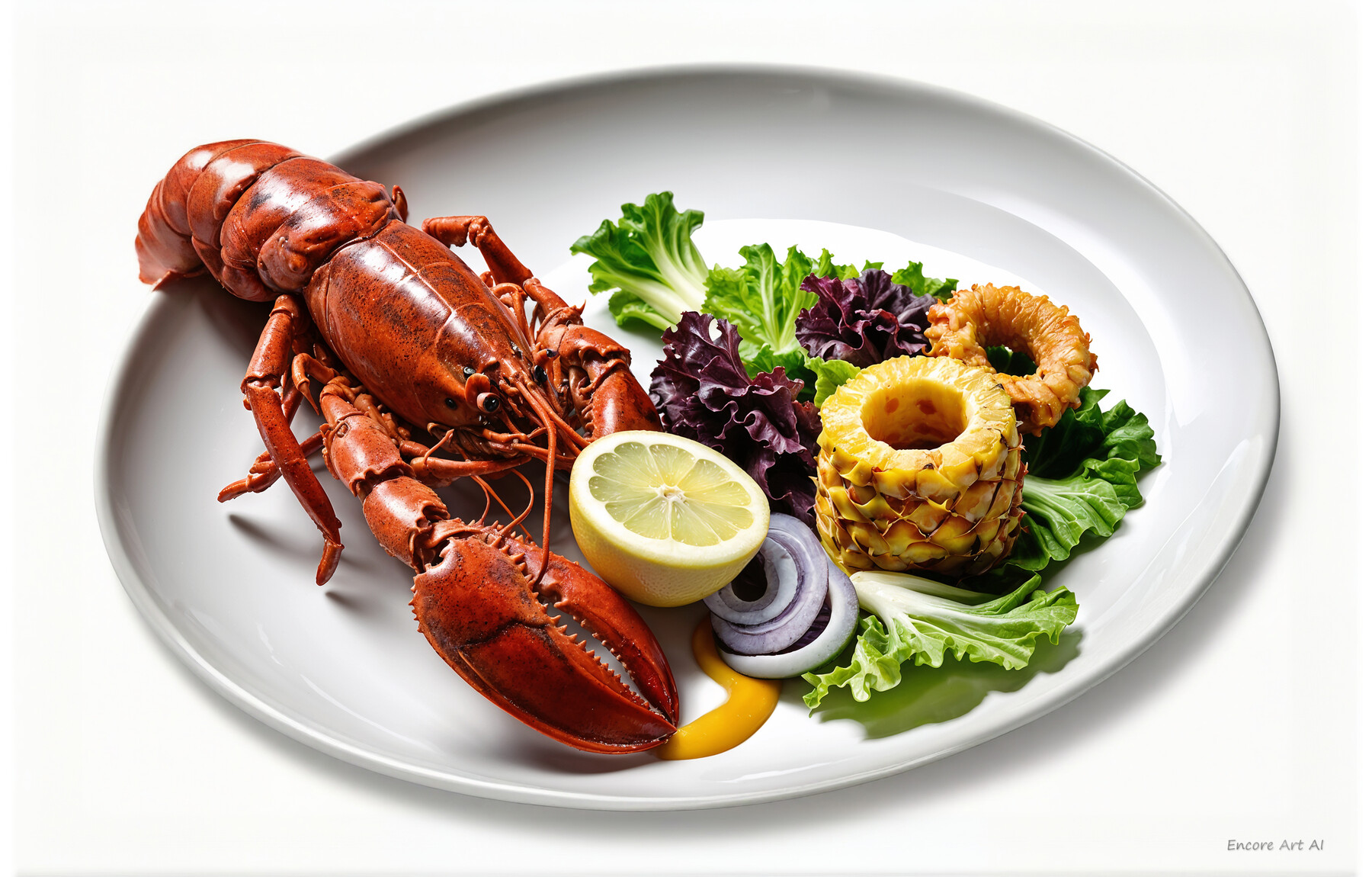
Escher's lobsters is a large composition of a true 12K (114 MP) size and the next image in the HyperPixel format to be released on ArtStation. Qualified as a HyperPixel, the image has an ultra high resolution while featuring beautiful fine detail as a result of progressive upscaling, enhancement and meticulous manual inpainting using state of the art tools of the Stable Diffusion technology. The product images include 3 ‘pixel morsels’, artfully cut out fragments of the master image meant to show the texture and intricate detail of this creation at the 1:1 scale.
- description
This artwork, executed in a bright photorealistic style, presents a top view on a round-shaped object of complex geometric structure, populated with small colourful objects and pictured against a flat black background. The object’s base shape and apparent purpose is that of a ceramic dinner plate, judging by the multiple food objects of a gourmet variety distributed on the object that include strikingly realistic lobsters of various sizes, pieces of cheese, lemon, fried potato, onion, pineapple, lettuce leaves, olives, and a splash of a light brown sauce in a mini-saucer, complete with a teaspoon. At the same time, the object seems to be also purposed as a painter’s palette, as indicated by the multiple characteristic round holes punched in it (some apparently to be used for the painter’s grip), and by the range of paint wells containing small quantities of paint in various colours. There is also a painter’s brush lying on the object’s top edge (which, conveniently, has a fork on its other end), The white bottom of the object is adorned by a black ornate pattern not unlike the one often featured in Australian aboriginal art.
The most puzzling quality of the object, however, is its supposed 3D shape. With multiple saucer holders protruding from its surface in various orientations and in a manner that doesn’t quite make sense in the real world, it reminds us of the confusing spatial geometry found in pictures by the famous Dutch artist MC Escher. Another fragment of the artwork that confirms our guess of the Escher connection is one of the lobsters on the right side which is rendered half in a realistic 3D fashion, half as a flat drawing in black on white, with the middle part as a transition between the two. The more we look at the pictured object, the more we get convinced that it cannot possibly serve for either of the two purported uses, a dinner plate or a painter’s palette. It’s not much else than a digital art illusion.
what it is for
The main image does not have any other utility than to be enjoyed as a modern digital art piece. It is not intended to be used as a screen wallpaper (although you could use it that way if you like), or a reference, or an illustration. It is to be used more or less like large paintings of old masters were used: to be viewed at a distance, then studied up close in detail, marveling at the beauty of the fine detail and the brushstrokes - only the canvas is now your gorgeous LED screen, with brushstrokes composed of self-illuminating pixel patterns. Such is the unique richness of detail in this HyperPixel creation that, each time you pan or zoom somewhere in the image, you may discover something new, glimpse a nuance not seen before. With the size this large, and detail this dense, this image is an invitation to an endless visual discovery.
inspiration source and brief history
The presented artwork is the result of my experimentation with infusing MC Escher-inspired geometric shapes into a previously AI-generated monochrome image, and adding various creatures and objects along the way. The novel CanvasInfusion style approach of using an abstract picture as the structural basis for a new, and a very different, version is the unifying feature of the series (and also a FoldPix set) in which the artwork is included, hence the series title, The involute canvas. The artistic content of the image draws on my longtime fascination with making fractals and otherwise intricately-shaped images, something that I have been busy with since the mid 1990s. The new (‘infused’) version was rendered year and half after the original (base ‘clipart’) one was generated in December 2023; it was then substantially upscaled and enhanced via extensive inpainting, with the goal to elevate it to the HyperPixel standard and publish as a digital art product.
the tools used
Prompt Hunt (the original AI image generator), Leonardo.ai’s Universal Upscaler, Krita, an advanced digital art creation and image editing software, and its Krita AI Diffusion Hires extension with the colossusProjectXL model, Topaz Labs’ Generative Upscale.
image format and preview options
The main image is of the 10000x12000 resolution; for the uncompromised quality, it is served in the lossless PNG format. A preview version is also available in the Encore Art AI portfolio feed.
tags
lobster, palette, brush, fork, well, white, black and white, pattern, aboriginal art, pattern, color, colorful, cheese, sauce, lemon, onion, pineapple, olive, intricate, paradoxical, hyperpixel, ultra hires, ai-assisted, krita ai, encore art ai
For personal use and one commercial project (up to 2,000 sales or 20,000 views).
TutorialsOne copy to be used by a single user.
Installable ToolsOne installation by a single user.
Learn More