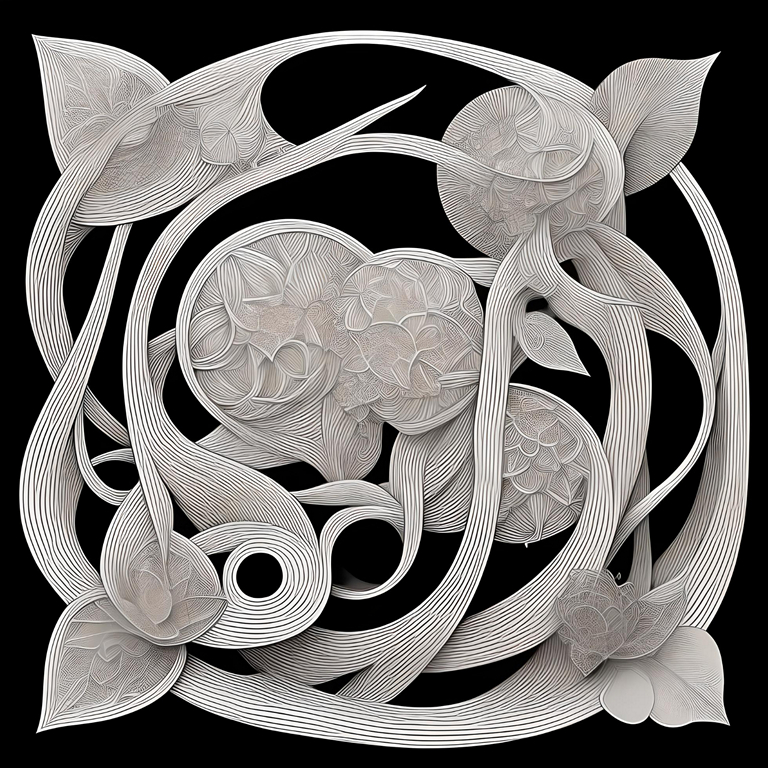
CanvasInfusion style
The CanvasInfusion style is a product of an AI-assisted image-rendering technique that I developed recently and have been using for making ultra high resolution images with artistic content. It is the result of my experimentation with infusing mini-scenes containing various characters, creatures and objects into a previously computer-generated image of an often abstract nature. This approach of using an abstract picture as the structural basis for making a radically different version of the image is the unifying feature of most artworks of The involute canvas series (and of the corresponding FoldPix set) published recently on ArtStation, as well as of a few of the images in the Fractal Cameos series. A series of even more spectacular images is coming soon to the Encore Art AI account, mainly of the groundbreaking 16K resolution.
In Stable Diffusion technical terms, the underlying process is an img2img refinement of a source image using a high denoise value. The effect is only achieved when using certain SD imaging models coupled with certain samplers and a specially crafted prompt, as well as an image with suitable (somewhat noisy) pixel content as the source. The output of applying the said technique is a unique combination of amazingly shaped environments, exteriors or interiors of fluid geometry densely populated with prompted characters and objects and rendered with the finest detail ever found in AI-generated images. However, due to the nature of the denoising process, the typical output of the CanvasInfusion technique is rarely free of artifacts and distortions, as evident in most rendered characters and recognisable objects, which necessitates an extensive post-editing of the image (called 'inpainting' in SD circles). This circumstance, coupled with the fact that this effect can only be achieved at certain very high resolutions (8K and up), often leads to images qualified for the stringent HyperPixel standard.
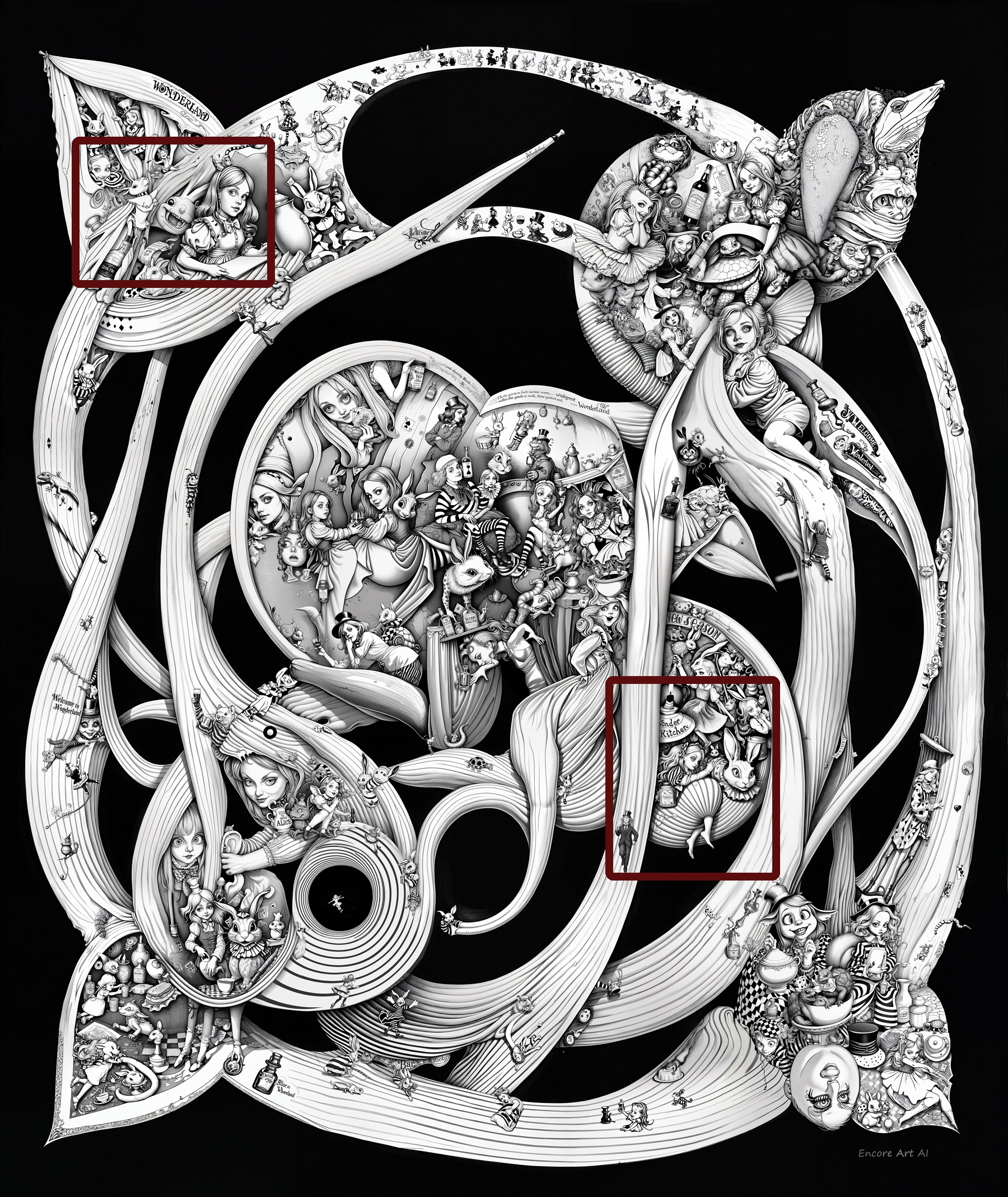
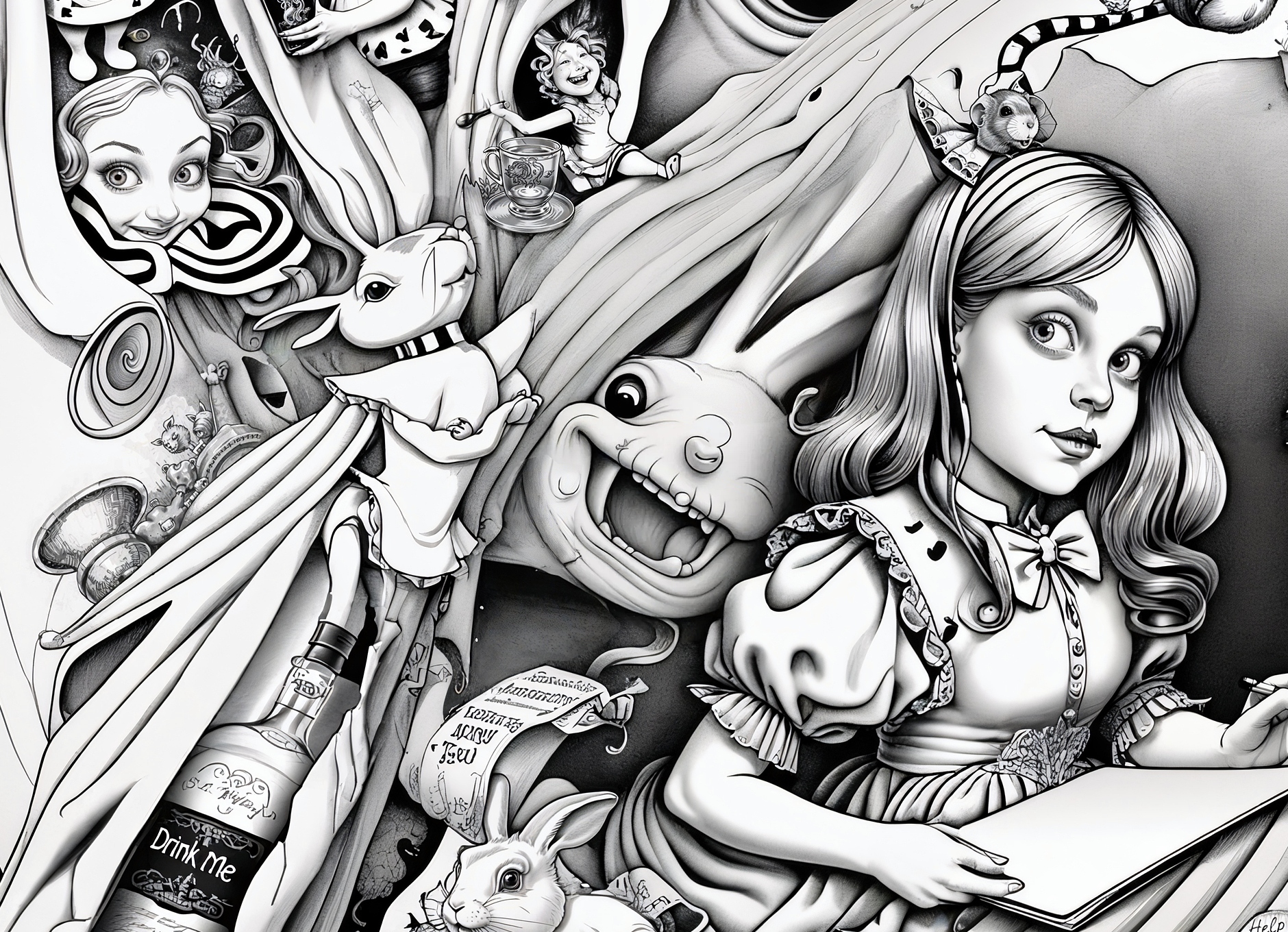
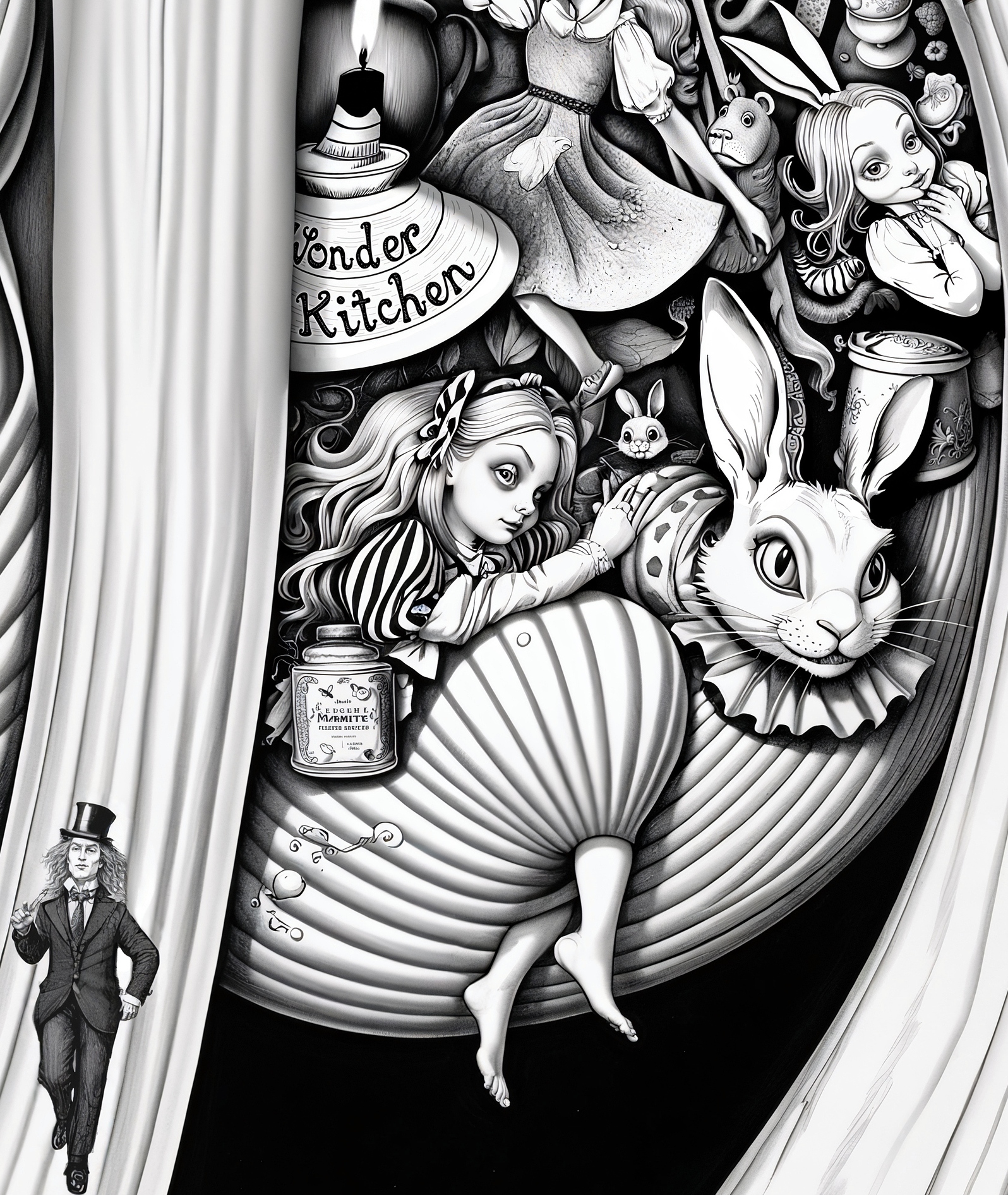
Example: Debauchery in Wonderland, a scaled down version of a 12K 116 MP HyperPixel artwork and two fragments at 1:1 scale; rectangle markers show fragment areas in the main image (available for a more detailed look in the digital product featuring the artwork). The source image of an abstract geometric form that served as its structural basis is attached last.
fragment 1
fragment2
the source 'clipart' image served as the structural basis